The Power + Equity Movement Infrastructure Fund
Power up the movement to sustain and accelerate our impact.
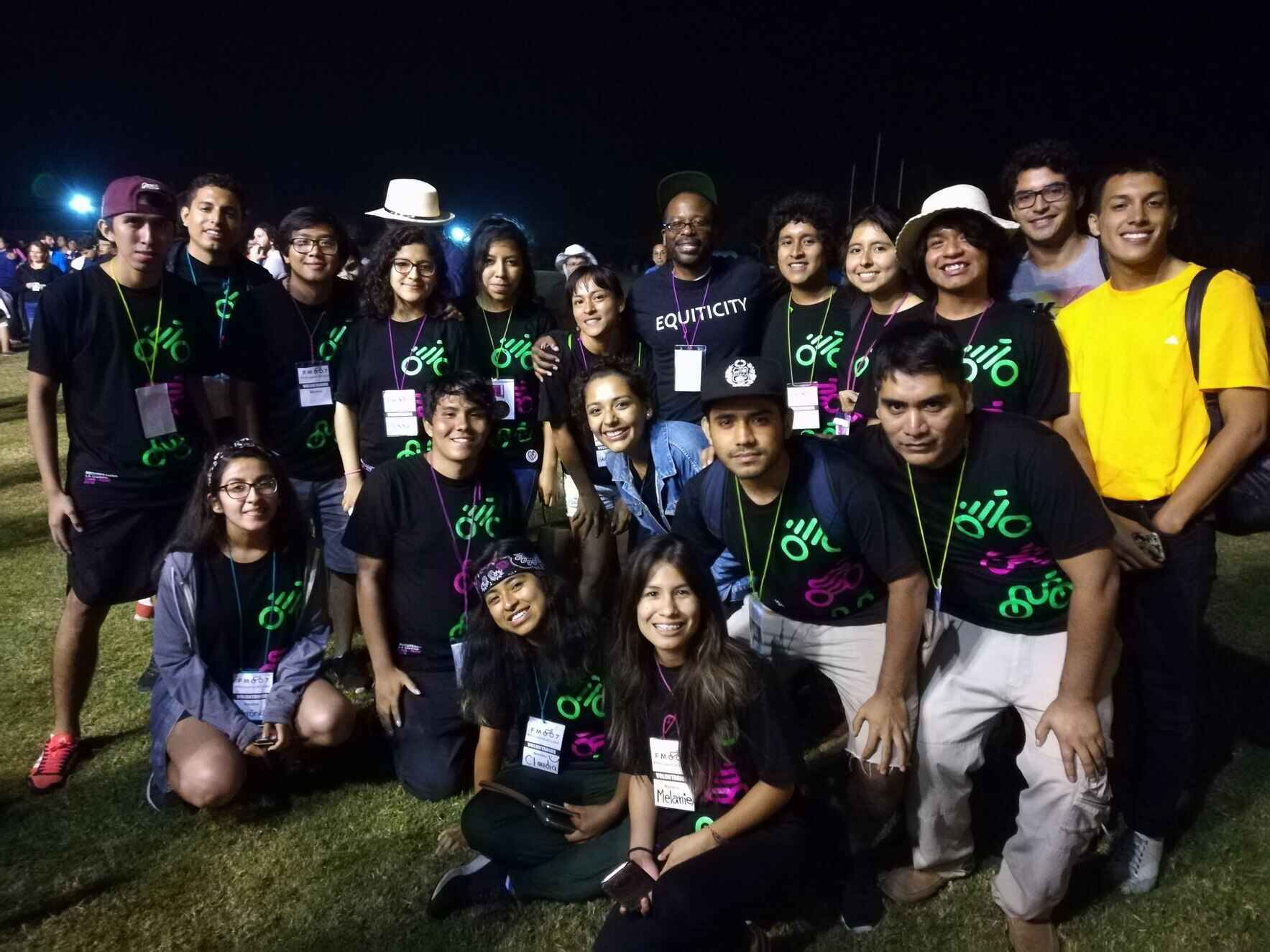
We are fundraising to transform neighborhoods and cities.
Equiticity is a racial equity movement operationalizing racial equity, mobility justice, and environmental justice, by building community power, creating systems change, and delivering community-centered programs that transform lives, neighborhoods, and cities.
We’re seeking your unrestricted investment in The Power + Equity Movement Infrastructure Fund to ensure we are best positioned to respond quickly, support the urgency of the moment, sustain momentum, and expand our impact through 2026 and 2027.
Our initial fundraising goal is $150,000 by December 31, 2026.
Our stretch fundraising goal is $750,000 by early next year.
About Equiticity
Equiticity, headquartered in the North Lawndale neighborhood on the Westside of Chicago, is a racial equity movement, operationalizing racial equity by harnessing our collective power through research, advocacy, programs, Community Mobility Rituals, and social enterprises, to improve the lives of Black, Brown and Indigenous people in our society.
Equiticity’s vision is a mid- to large-size U.S. city where racial equity is fully integrated at the policy and legislative levels into every function, department, resource, and budget associated with the city’s operations, services, and programs.
We envision Equiticity transforming one city into a global model that normalizes, prioritizes, and operationalizes a comprehensive commitment to racial equity. This isn’t just a lofty goal, it’s a tangible operational framework that leads to an equitable flow of resources that reduce violence, improve health outcomes, create jobs, and ultimately make our neighborhoods and cities more liveable for Black, Brown, and Indigenous people.
Six philosophies shape Equiticity’s work:
- Operationalizing racial equity, mobility justice, and environmental justice
- Mobility as a human right
- Community ownership of the transportation planning process
- Integration of physical infrastructure and social infrastructure
- Community-led, neighborhood-based mobility models
- Neighborhood demand generation for active and sustainable transportation
Equiticity organizes our work into five areas of focus:
- Research to better understand the severity of the problem and where resources should be focused to solve the problem.
- Advocacy informed by our research to achieve systems change at the policy and legislative levels.
- Programs to have an immediate impact on reducing inequities impacting our primary audience of Black, Brown, and Indigenous communities.
- Community Mobility Rituals to mobilize and socialize people around mobility, infrastructure, and the assets and inequities in neighborhoods.
- Social enterprises to create jobs and achieve financial sustainability for our racial equity movement.
Equiticity Process for Transformation (Theory of Change):
- Mobilization: Facilitate grassroots organizing and programming at the neighborhood level, engaging people directly in the work to transform neighborhoods, in order to establish a coordinated, citywide network of people and organizations advocating for racial equity.
- Politicization: Inspire, teach, and train people across Chicago to care about, fully understand, and work toward achieving racial equity and racial justice in our city.
- Activation: Engage people directly in the execution of our work as participants, volunteers, organizers, and staff.
- Organization: Execute a full, dynamic, and diverse suite of repair/build and inside/outside strategies citywide, developed and implemented by an active network of racial equity advocates, strategists, and tacticians.
- Transformation: The transformation we seek in our neighborhoods and in our city is focused on reducing violence, improving health, and creating jobs, in order to make our streets, neighborhoods, and cities more liveable for Black, Brown, and Indigenous people.
This transformation is three-fold:
- Internal structures, systems, and institutions are transformed through a pervasive, persistent, operational commitment to racial equity.
- Transformational life outcomes are achieved for Black, Brown, and Indigenous people.
- Cities, states, and the country deliver on racial justice, and ultimately, achieve racial equity in our society.
Equiticity’s Ecosystem of Impact
The Go Hub: A Community Mobility Center
BikeForce Workforce Development Program
Mobility Opportunities Fund (MOF)
Advocacy
Research & Consulting
Social Enterprises
Community Mobility Rituals - A Deep Dive
The idea of mobility events is not new. Organized rides and walks have been happening in neighborhoods and cities for generations. Transit agencies have long offered travel training programs. Group scooter rolls started when scooter share systems first launched in our cities. Ciclovia, or what we refer to in the US as Open Streets, was founded in Bogota, Colombia in December 1974 by architect Jaime Ortiz Marino.
After co-founding Slow Roll Chicago in 2014 and founding Equiticity in 2017, with both organizations focusing on community bicycle rides, Olatunji Oboi Reed began to study the impact of socialization events at the neighborhood level in contributing to reduced violence. He uncovered the role of neighborhood rituals helping neighbors and residents feel more socially connected and more responsible for one another. He immediately realized the work Equiticity was doing through various mobility events were also rituals.
It was at this moment that Oboi coined the term “Community Mobility Rituals” as a way to name the work many people and many organizations have been doing for decades across the US and around the world. He also began to codify the term as a way to explain what makes mobility events become rituals and what is their impact on our neighborhoods.
Equiticity created CMRs to establish community ownership of the transportation planning process, integrate physical infrastructure and social infrastructure, and operationalize racial equity, mobility justice, and environmental justice in the transportation sector. Equiticity has developed an extensive network of community-based support that helps ensure optimal outcomes for each CMR; our partners collaborate with us to conceive, promote, execute, and evaluate unique CMRs that are well attended because they are relevant to participants and reflect the rich tapestry of neighborhood assets. Our CMRs also raise awareness and build power among residents to address racialized inequities and bring about sustainable changes.
As Equiticity has experienced, the impact of CMRs is significant. Through a rhythmic schedule, CMRs foster a sense of shared space and experience, thus integrating physical infrastructure and social infrastructure. CMRs contribute to increased social cohesion and collective efficacy, which can lead to reduced perceptions of violence and increased engagement in hyperlocal activities, such as shopping, recreation, fitness, and socializing. More short trip activities and more vibrant streets contribute to revitalizing neighborhoods by attracting more retail and creating more job opportunities.
Equiticity hosts five types of CMRs:
- Community bicycle rides
- Neighborhood walking tours
- Public transit excursions
- Group scooter rolls
- Open streets festivals
Elements of CMRs:
- Rhythmic schedule
- Hyper-local, neighborhood ownership and focus
- Priority on socialization
- Racialized healing
- Reduced barriers to participation
- Shared customs
- Active disruption of the status quo
- Imprinted memories on bodies, minds, and spaces
2026 Equiticity Fundraising Objectives
Why unrestricted, why now?
The shift in federal policy priorities has had a material, adverse impact on our racial equity movement. While restricted grants help us execute specific programs, these types of grants do not provide for the internal infrastructure of the movement. Unrestricted general operating grants provide support for the internal infrastructure, however, these types of grants are difficult to find and secure.
The urgency of the moment is amplified by the federal government’s harmful cuts to many of the departments that are vital to our work, including transportation, environment, and energy. Consequently, federal grants have been canceled or paused, and private foundations are facing significant pressures to reduce funding for racial equity and racial justice. Add to this funding crisis impacting Equiticity and many nonprofit organizations across the US, a racist and egregious attack on racially marginalized people and our communities in our communities.
If not now, when?
General operating support is what keeps Equiticity powered to:
Your unrestricted gift funds the operating “engine” behind the work, including:
- Movement Infrastructure: Functional staffing (organizational leadership, accounting, human resources, operations, marketing/communications, impact evaluation, and development), strategic planning, organizational development, partnership development, and the critical backbone capacity to move from idea to vision to strategy to implementation to evaluation.
- Rapid Response: Accelerate our ability to mobilize, politicize, and organize around urgent advocacy and policy matters and around urgent neighborhood matters.
- Community Mobility Rituals (CMRs): Deliver our full suite of CMRs in both the North Lawndale neighborhood on the Westside of Chicago and the Bronzeville neighborhood on the Southside of Chicago. In addition, implement a citywide series of community bicycle rides, neighborhood walking tours, and park walking tours.
- Program Excellence and Impact: Strengthen the full lifecycle of our programs, from shared vision and design to implementation, evaluation, and continuous improvement. Invest in the leadership, management, staff training, systems, and trusted neighborhood coordination that ensure every program is delivered with excellence, resulting in deepening impact, advancing transformation, and honoring our accountability to the community.
- Operational Excellence and Impact: Ensure Equiticity has the operational strength to deliver results at the pace this moment demands. This includes the core functions that donors rarely see but every community outcome depends on: sound financial management, strong staff support and retention, compliant and efficient processes, secure data and learning systems, and disciplined planning and performance management. Operational excellence allows us to scale what works, protect community trust, and sustain long-term movement capacity.
- Geographic Expansion: Grow our work in more neighborhoods across Chicago, in more cities throughout the US, and in more countries around the world.
Fundraising Goals
Additional Investment Options
Tailored Investment: Equiticity welcomes your personal inquiries regarding higher levels of philanthropy, including major gifts, planned giving, endowments, corporate sponsorships, foundation grants, and multiyear commitments.
Peer to Peer Fundraising: Equiticity welcomes your interest in hosting private, personalized fundraising salons to share our vision, mission, and work with your family members, friends, colleagues, and networks.
Stewardship and Recognition
We will provide:
- A personal in-person or virtual briefing with Equiticity leadership twice annually.
- Quarterly update report highlighting progress, impacts, setbacks, and needs.
- Personalized donor recognition strategies or anonymity, aligned with your preferences.
Personal Donor Invitation: